







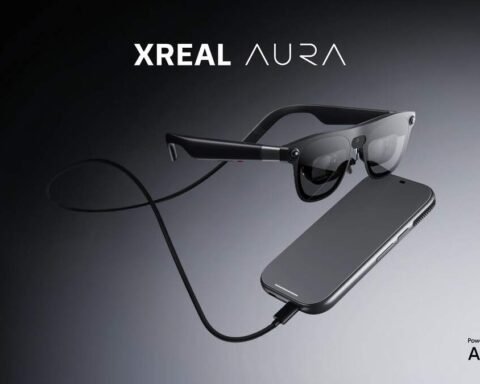







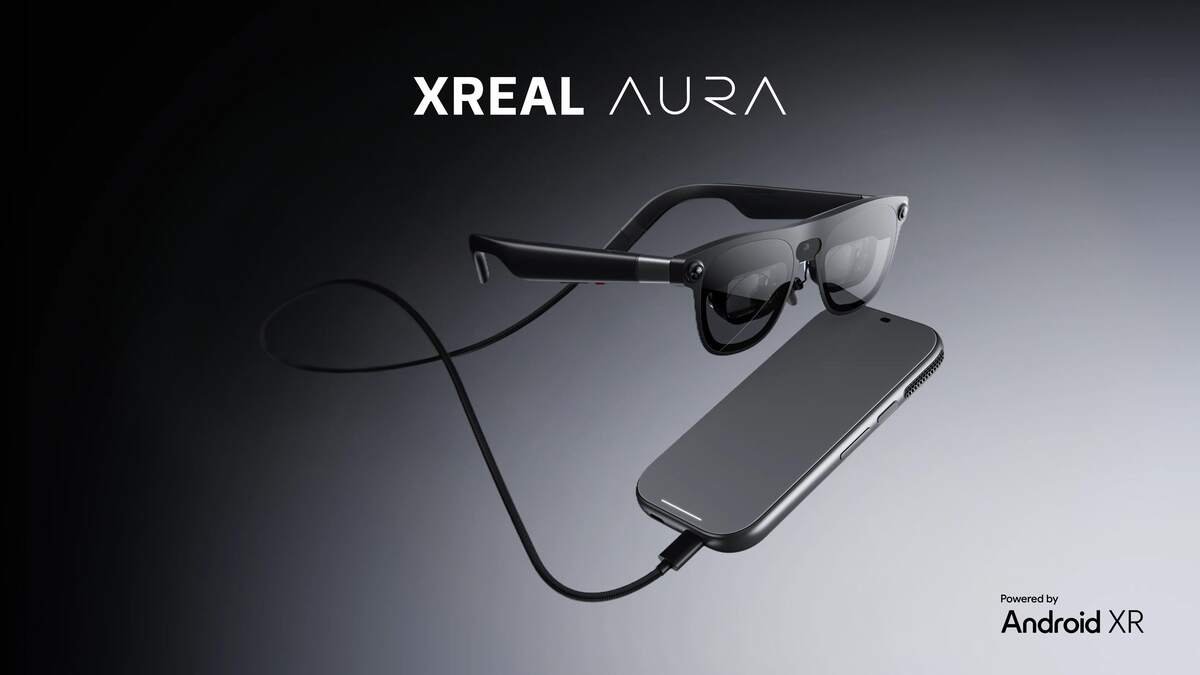
XREAL targets new high-end category with AURA smart glasses set to retail from US$ 1279 XREAL’s latest Android XR powered AURA smart glasses set to retail from US$ 1279 hit the market within a similar price range to Meta’s newly announced VR Glasses, making for an interesting dueling duo of eyewear and other lightly-weighted systems.
The company revealed last week that AURA would begin at $1,279 in the US, with the first pre-orders limited to people who already had paid reservations. The premium model, which brings 16GB of RAM, 512GB of storage, is priced at $1 499 while the basic model has 12GB of RAM and 256GB of storage. General orders are due to open “in the coming weeks”.
AURA was designed by a partnership between XREAL, Google, and Qualcomm, and devices use Android XR’s platform and Gemini AI from Google, and is powered by Snapdragon Reality Elite platform from Qualcomm. The glasses are different to traditional VR headsets as they feature transparent optical displays, meaning you can view your environment without the need of camera passthrough technology.
The split-compute nature of AURA is perhaps the most defining feature of the product, with the glasses offering the reality experience weighing in at just under 95 grams and the processing, battery, and wireless connectivity supported by a dedicated computing puck connected to the glasses by cable. The puck also doubles up as a touchpad to manage the interface.
The glasses provide a 70-degree field of view and support hand tracking, while Android XR enables use of Google Play-based apps and experiences using Gemini platform. XREAL has pitched AURA as a device for entertainment, gaming, and productivity and spatial computing, rather than just another pair of smart glasses. The company says that by wearing the device, people will be able to generate multiple huge virtual screens, work with multiple screens and peer into digital objects.
The timing pits XREAL directly against Meta. Meta announced its VR Glasses in September at $1,299.99, with the device due to arrive in spring 2027. Like XREAL, Meta moved the processing and battery into a puck where the glasses weigh about 100 grams.
Though, while similar in price and weight, the two shows go about them in different ways. The XREAL AURA has transparent screens, requiring users to simply look out of the lenses and see the physical world around them. The Meta VR Glasses use camera passthrough to show physical surroundings, giving a more VR-like experience whilst keeping spatial awareness.
Meta also has its own key benefits. Meta’s VR Glasses are first and foremost controlled via eye and hand tracking and use the same Horizon OS environment as Meta Quest. Meta claims the glasses will launch with support for over 75 hand-controlled games, as well as entertainment, productivity, and live sports apps. It will also be compatible with Gemini, Google Play apps and Android XR features with the user always able to see their real-world environment. Transparent design might even make AURA seem more like a powerful PC you wear on your face, instead of a typical VR headset.