

















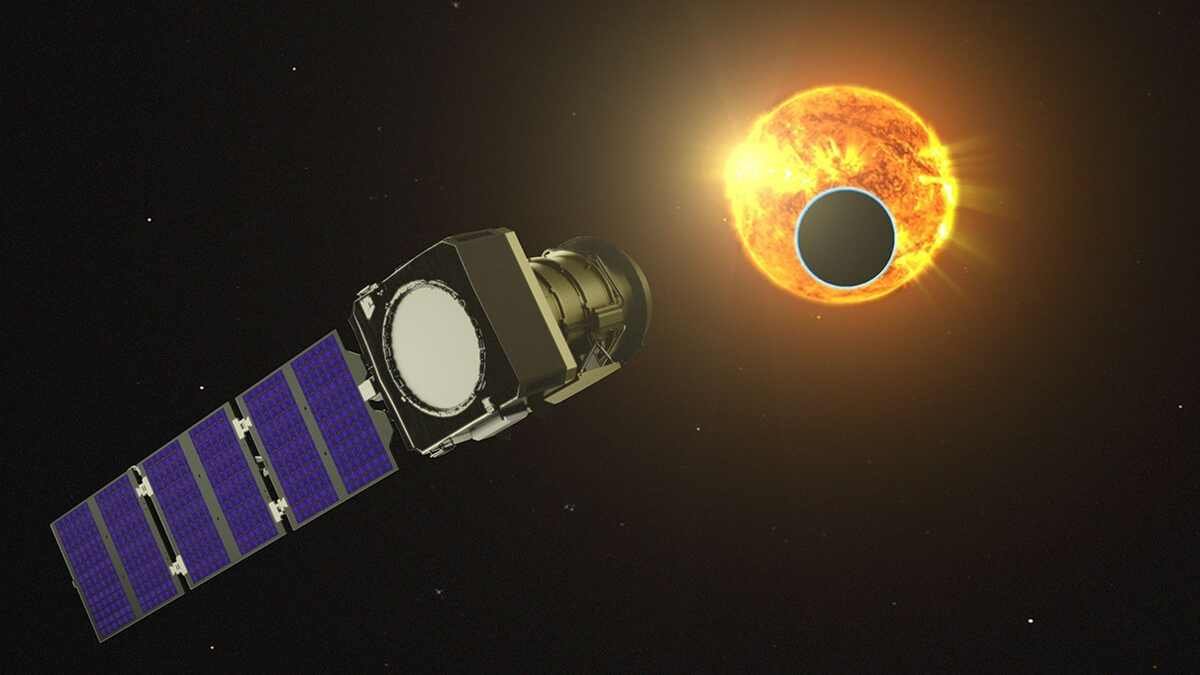
In a major leap for space science in January 2026, NASA successfully launched the Pandora space telescope, marking the start of a groundbreaking mission to study the atmospheres of exoplanets — planets orbiting stars beyond our Solar System. The mission is expected to deepen our understanding of how distant worlds form and evolve and may even help identify habitable conditions around alien suns.
On January 11, 2026, a SpaceX Falcon 9 rocket lifted off from Vandenberg Space Force Base in California, carrying the Pandora SmallSat into a Sun-synchronous low Earth orbit, where it will operate for at least one year. The mission is part of NASA’s Astrophysics Pioneers Program, an initiative that seeks to accomplish high-impact science using cost-efficient, small satellite platforms.
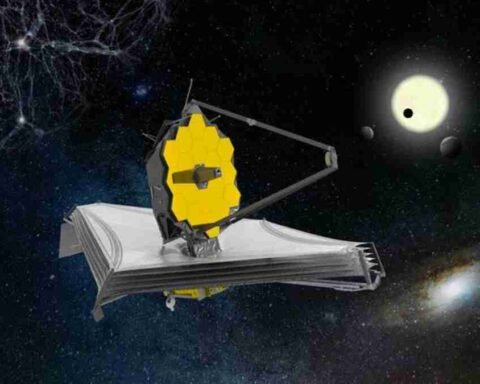
Unlike massive observatories such as the James Webb Space Telescope (JWST), Pandora has a relatively small 17-inch (45 cm) telescope yet carries powerful instruments that combine visible and near-infrared observation capabilities. This design allows Pandora to monitor stellar activity and exoplanetary atmospheres with long, continuous observations, giving scientists a deeper look at these distant worlds over extended periods.
A New Way to Study Exoplanets
The central goal of Pandora is to tackle one of the biggest challenges in exoplanet research: separating the light signals from a star and its planets. When an exoplanet passes in front of its host star — a process known as a transit — a small portion of starlight filters through the planet’s atmosphere. By analyzing this filtered light, scientists can detect atmospheric elements such as hydrogen, water vapor, clouds, and haze. However, the stars themselves produce signals that can mask or mimic these planetary signatures. Pandora’s multi-wavelength observations will help disentangle these effects, providing clearer insights into the atmospheric composition of exoplanets.
Over its mission, Pandora plans to observe at least 20 known exoplanets, many of which orbit small stars such as K and M dwarfs. Each target will be watched for multiple transits to build a robust dataset, offering unprecedented detail on atmospheric behavior and interactions with stellar activity.
Supporting Missions and Scientific Reach
Pandora’s launch wasn’t alone — it shared its ride into space with two NASA-sponsored CubeSats: BlackCAT (Black Hole Coded Aperture Telescope) and SPARCS (Star-Planet Activity Research CubeSat). The BlackCAT will study high-energy phenomena like gamma-ray bursts and active galaxies, while SPARCS will monitor stellar flares and their effects on surrounding space environments. Together, these small satellites expand NASA’s scientific reach across different wavelengths and astrophysical phenomena.
The Pandora project also illustrates how cost-efficient missions can produce valuable scientific data. Developed through partnerships between NASA’s Goddard Space Flight Center, the University of Arizona, Lawrence Livermore National Laboratory, and Blue Canyon Technologies, Pandora demonstrates a new model of rapid development and deployment for space science instruments. With a mission budget far smaller than traditional space telescopes yet delivering large scientific returns, Pandora paves the way for future small satellite missions.
Early Mission Success and Ongoing Operations
Shortly after launch, mission controllers confirmed full acquisition of the Pandora satellite’s signal during its first ground pass, indicating the spacecraft is healthy and ready to begin its scientific work. With its orbit bringing it around Earth every 90 minutes, Pandora will soon enter a commissioning phase before beginning full science operations.
Once operational, Pandora will begin its systematic observations of star systems and their planets, collecting data that will help scientists interpret and refine observations from other missions like JWST, TESS, and future space telescopes. Its detailed measurements will support the global effort to characterize exoplanet atmospheres and identify conditions that could favor life.
A New Era in Exoplanet Science
The successful deployment of Pandora marks a significant milestone in the journey to understand worlds beyond our own. By combining innovative engineering with strategic mission planning, NASA and its partners are unlocking new avenues for discovery that could reshape our perception of the universe. As Pandora begins its mission to explore the atmospheres of distant planets, astronomers and space enthusiasts alike are watching with anticipation — eager for the insights this small but powerful telescope will bring.