















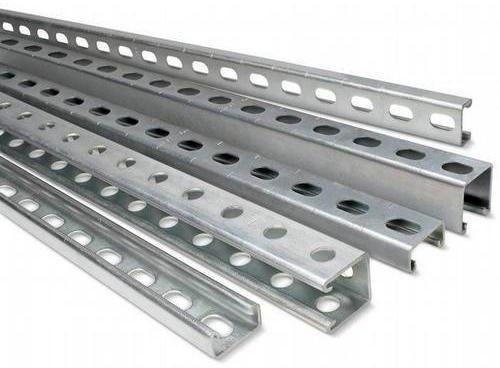
As a fabricator, there is no denying that you do a lot of work with structural steel and aluminum. After all, it is widely used in trailers and also makes a perfect wood substitute for construction. The I-beam remains to be the most popular structural shape to-date, but we’d argue that there are times when you’re better off with a C channel.
In a nutshell, a C channel, also known as C Section steel, or C purlin, is a type of structural steel with a cross-section that resembles the letter ‘C.’ It is popularly used in manufacturing, construction, and other industries thanks to its high strength, durability, and versatility.
It is important to note that a C channel can be made using different materials, including carbon steel, stainless steel, and galvanized steel, each with its own unique properties and applications. Having said that, below are some of the reasons to consider C channel for a metal fabrication.
Meet C-Section Channel
Even though I-beams are strong, they are not always easy to incorporate into your metal fabrication. The issue is that you only have two parallel faces to mount to. Mounting to a face parallel to the web simply means adding angle to the flanges. Fortunately, C channel eliminates this by moving the web out to one edge of the flanges, changing the cross-section from an ‘I’ to a “C” in the process.
In this regard, C channel has three flat surfaces for mounting to. It still remains strong, although this geometry does give up a little of the rigidity of the I-beam. Against that, though, it avoids the use or brackets or angel, saving money, time, and weight.
Strength-to-Weight
Even though a big heavy piece is strong, the geometry of an I-beam is optimized to get the greatest possible strength from the least amount of material. In the I-beam, the vertical web resists bending while the top and bottom flanges counter any twisting. If the flanges are wider than the height of the web, it becomes an H-beam. It is all down to the cross-sectional shape.
Keep in mind structural aluminum is lightweight and easy to work with. Not forgetting, unlike wood, it won’t burn. That makes it a good alternative to lumber for framing walls or installing ceiling joints and rafters. And being an open section unlike tube material, it is easily washed clean and drains quickly and easily rather than retaining moisture.