














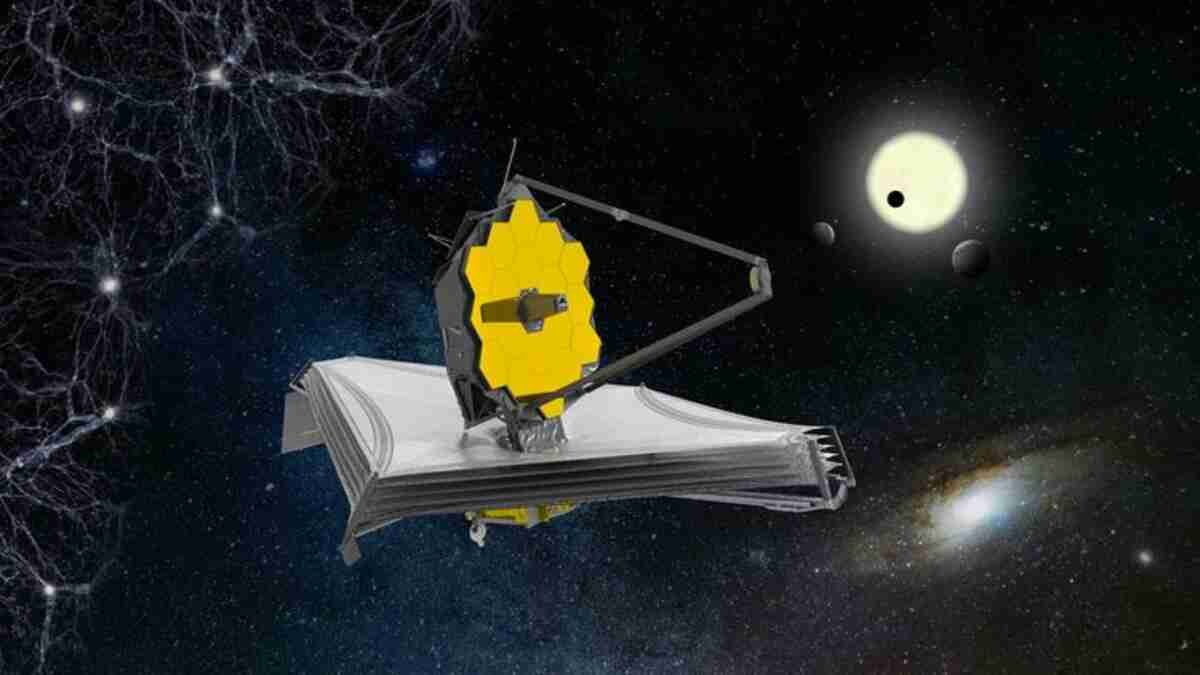
The Laser Interferometer Space Antenna (LISA) mission represents one of the most ambitious space science projects of the coming decade, bringing together the European Space Agency (ESA) and NASA to build the first space-based observatory capable of detecting gravitational waves from the depths of the cosmos. Unlike ground-based detectors, this pioneering mission will place three spacecraft in a vast triangular formation millions of kilometers apart to measure the faintest ripples in space-time caused by cataclysmic events such as colliding supermassive black holes. The mission has now progressed well beyond the conceptual stage and is moving firmly into hardware development and prototype testing as engineers lay the groundwork for a planned launch in the mid-2030s.
The concept of LISA breaks new ground in astronomy by expanding the frequency range of gravitational waves that can be detected. Ground-based observatories such as LIGO and Virgo have already confirmed the existence of gravitational waves from smaller black hole mergers, but their sensitivity is limited to higher-frequency signals. LISA’s design, with spacecraft separated by about 2.5 million kilometers and connected by laser beams, will allow scientists to observe much lower-frequency waves that originate from events inaccessible to ground facilities. This opens a new observational window on phenomena like the mergers of supermassive black holes at the centers of distant galaxies and the inspiral of compact objects over long periods.
Recent progress on the mission highlights both technological achievement and international collaboration. NASA and its partners at the Goddard Space Flight Center in Maryland recently completed tests on a second prototype of a critical component for LISA’s laser system, an optical module designed to maintain extraordinarily stable laser frequencies over vast distances. These advances are essential for detecting minuscule changes in distance caused by passing gravitational waves, with the precision required pushing the limits of current engineering. NASA’s contributions also include telescopes and devices to manage electrical charge accumulation on delicate proof masses, all of which must function flawlessly far from Earth.
In parallel, ESA has made significant strides on the overall mission infrastructure. The agency formally adopted LISA as a flight project, clearing the path for full-scale construction beyond the planning and design phases. Contracts with industrial partners have been sealed to begin building key components of the spacecraft and their high-precision instruments. The LISA Consortium, comprising research institutions and space industry leaders from around the world, continues to coordinate efforts on mission science and technology, ensuring that each spacecraft and subsystem meets rigorous requirements for operation in deep space.
These developments arrive against a broader backdrop of evolving priorities in global space exploration. While NASA faces budget challenges that could affect its support of some international missions, investments in LISA remain robust as ESA and participating partners commit resources to maintain progress toward the mission’s ambitious goals. The success of precursor missions, such as LISA Pathfinder, which tested key technologies in orbit, gives confidence in the feasibility of detecting gravitational waves from space and informs ongoing engineering work.
The scientific potential of LISA is extraordinary. By capturing gravitational waves that cannot be seen with light-based telescopes, the mission promises to reveal details about the formation and growth of structures in the universe, the dynamics of black hole mergers, and the nature of space-time itself. It will complement existing observatories and expand the toolkit available to researchers exploring the most extreme corners of the cosmos. As data begins to flow from LISA after its launch around 2035, scientists expect discoveries that could reshape our understanding of fundamental physics and cosmology.
International collaboration lies at the heart of LISA. Scientists from the United States, Europe, and other regions are contributing expertise to instrument development, data analysis, and mission design. This partnership underscores how modern space science thrives on shared goals and resources, bringing together varied talents to tackle questions that no single nation could address alone. With each prototype test, hardware milestone, and scientific symposium, the mission moves closer to becoming a reality, promising to chart new territory in humanity’s quest to understand the universe.
In the coming decade, the Space Science community will be watching closely as LISA transitions from development to deployment. Its success could herald a new era of gravitational wave astronomy, offering unprecedented insights into the most powerful and enigmatic phenomena in the universe.